PONV for EDAIC: Risk Scores and Multimodal Prevention
Use a worked PONV risk assessment to separate prediction, baseline risk reduction, prophylaxis and rescue, with the fifth consensus update in view.
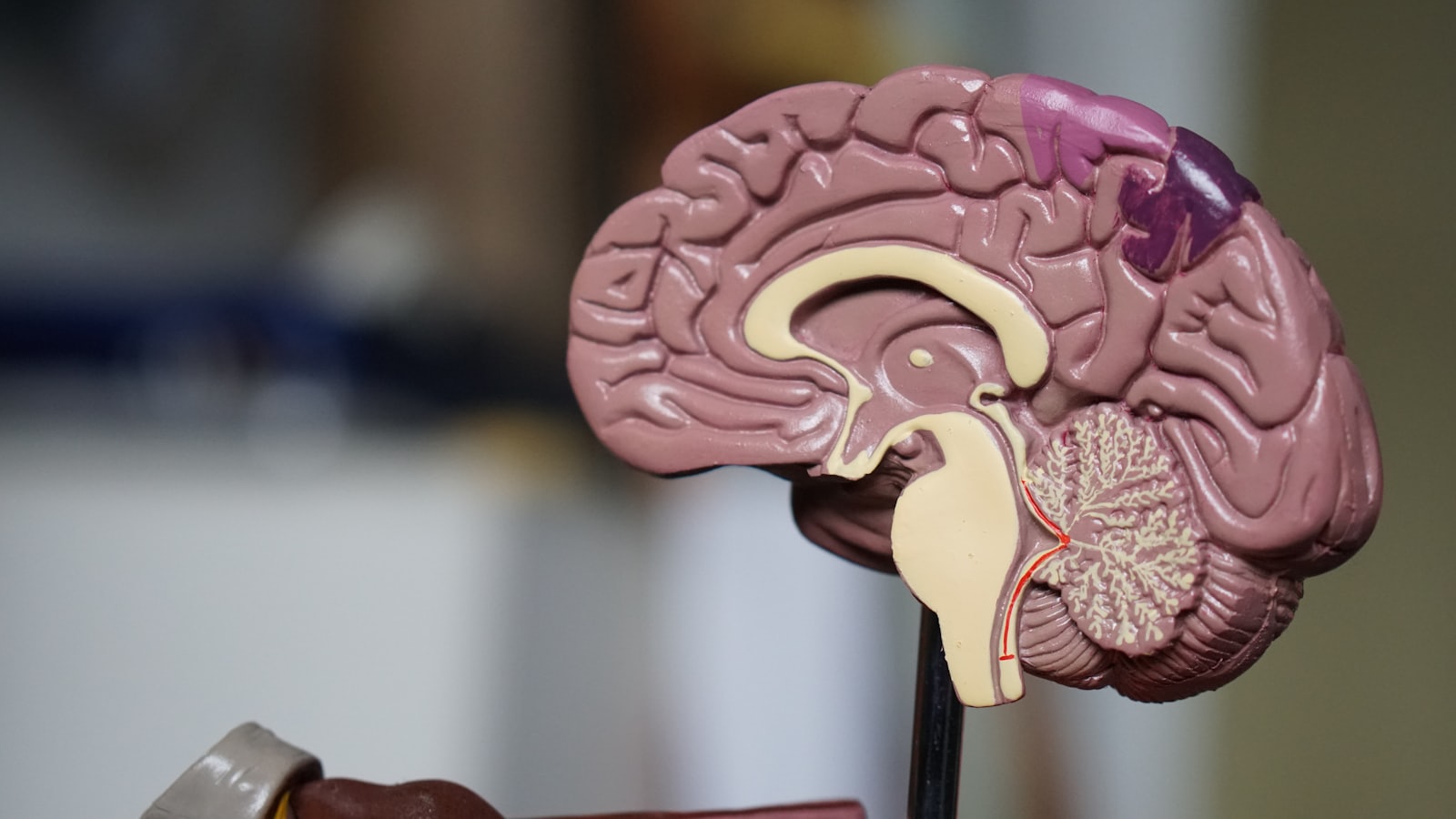
Postoperative nausea and vomiting prevention combines risk assessment, reduction of avoidable risk, prophylaxis and a rescue plan. A score estimates risk; it does not prescribe a complete anaesthetic or predict an individual outcome with certainty.
The fifth consensus executive summary, published in the September 2026 issue of Anesthesia & Analgesia, supports multimodal prevention while retaining a role for risk assessment. For EDAIC revision, learn how the parts fit together rather than memorising a list of antiemetic names.
Start with the question the score answers
The adult simplified Apfel score uses four predictors: female sex, non-smoking, a history of PONV or motion sickness, and postoperative opioid use. The 2020 consensus document describes these predictors and their use in risk assessment.
Consider an original practice case: a woman who does not smoke reports motion sickness and is expected to require postoperative opioids. She has all four predictors. Now change only the postoperative analgesia plan so that opioids are not expected. The score changes, but the other predictors do not disappear.
The educational point is not that every plan must be altered to improve a number. It is that patient characteristics and modifiable aspects of care occupy different places in the reasoning. Analgesia must still be effective and appropriate for the operation and patient.
Be precise about double counting. A history of motion sickness and a history of PONV contribute to the same combined predictor in the simplified score; they are not two separate points. Conversely, a feature omitted from a simplified score is not necessarily irrelevant to the whole perioperative assessment.
Try 10 EDAIC questions free
Create a free account and answer EDAIC-style Part 1 MTF questions — each one graded per statement, with a full explanation.
Use four boxes to organise an answer
| Box | The question to answer | Common error |
|---|---|---|
| Prediction | How likely is the problem in a relevant population? | Treating estimated risk as certainty |
| Baseline risk reduction | Which aspects of the anaesthetic or analgesic plan can reasonably reduce risk? | Assuming another antiemetic is the only option |
| Prophylaxis | What preventive measures fit the person, procedure and contraindications? | Listing drugs without considering mechanisms or harms |
| Rescue and discharge | What happens if prevention fails or symptoms occur after leaving recovery? | Calling prophylaxis failure proof that all treatment is futile |
Write those boxes at the top of a revision sheet. Place each fact under the box it actually informs. This makes it easier to spot a question that asks about rescue while offering an answer about initial prophylaxis.
What “multimodal” means in the reasoning
Combining approaches means considering more than one useful mechanism or part of the pathway. It does not mean adding unlimited medicines. Contraindications, adverse effects, interactions, timing and the clinical context remain relevant.
The fifth consensus discusses general multimodal prevention, risk mitigation and rescue from a different pharmacological class when PONV develops despite prophylaxis. It also cautions that evidence for adding increasing numbers of agents is not equally strong for every combination. Thus, “more” and “better supported” should not be used as synonyms.
An original comparison helps. Plan A contains two trade names for medicines with closely related actions; plan B combines a suitable anaesthetic risk-reduction strategy with distinct preventive mechanisms. Merely counting names does not establish which plan is more rational. You need to know the actions, suitability and evidence for the actual interventions.
This is a useful link to potency and efficacy: choosing a drug strategy is not simply a competition to find the “strongest” medicine.
Answer an EDAIC-style question
This is one exam-format Part 1 multiple-true-false question from our bank. Mark each statement true or false, then see the worked answer.
Regarding the pathophysiology of oxygen delivery and consumption in circulatory shock:
Mark each statement true or false:
In healthy adults at rest, systemic oxygen delivery is approximately 1000 mL/min while oxygen consumption is about 250 mL/min, creating a physiological oxygen reserve.
When systemic oxygen delivery decreases, oxygen consumption immediately falls in direct proportion, indicating supply dependency at all levels of DO₂.
Cardiac output is determined by the product of heart rate and stroke volume, with stroke volume being influenced by preload, afterload, and myocardial contractility.
The unifying feature of all forms of shock, regardless of aetiology, is acute circulatory failure associated with inadequate cellular oxygen utilisation.
In septic shock, early goal-directed therapy targeting supranormal oxygen delivery values has been shown to consistently reduce mortality across all patient populations.
A risk percentage is not a promise
Imagine a hypothetical untreated group with a 40% event risk. If an intervention reduced relative risk by 25%, the expected treated risk would be 30%, not 15%. The absolute reduction would be 10 percentage points. These are invented teaching values, not estimates for a particular antiemetic.
The calculation is 40% × 0.75 = 30%. The example shows why baseline risk matters when interpreting a relative effect. It also shows why a preventive intervention can be useful even when some treated patients still develop symptoms.
Now suppose a patient in the treated group vomits. That individual event does not disprove the population effect. Equally, a patient without symptoms does not prove that a particular preventive medicine was necessary. These are different levels of inference.
For more practice with those distinctions, use the absolute and relative risk examples.
Do not let the recovery-room label close the differential
Nausea or vomiting after surgery deserves assessment in its context. An exam question may supply additional findings that make the usual PONV pathway an incomplete explanation. Read the whole vignette before jumping to an antiemetic selection.
In a viva, first clarify timing, severity, what has already been administered and whether other concerning clinical findings are present. A sensible rescue discussion begins with that information. It should not consist of automatically repeating a remembered drug name.
Check your interpretation
Can a person with no simplified risk-score predictors still have PONV? Yes. A prediction tool does not divide people into certain cases and impossible cases.
Does motion sickness plus previous PONV count twice? No, they share one predictor in the simplified Apfel score.
Does breakthrough vomiting mean prophylaxis never works? No. A preventive strategy reduces a probability; it does not guarantee an outcome.
Is a longer drug list necessarily more evidence-based? No. Ask what each intervention adds and whether the combination is appropriate.
When revising in the AnesCORE question bank, label each statement as prediction, prevention or rescue before judging whether it is true.
Sources
- Gan et al: Fifth Consensus Guidelines for PONV, executive summary
- Gan et al: Fourth Consensus Guidelines for PONV, 2020
Prepared with AI assistance for examination revision; sources checked 6 November 2026. These original teaching examples are not official EDAIC questions. Not a patient-care protocol.
Start preparing for EDAIC Part I
Syllabus-mapped lessons, 30,000 MTF questions, spaced-repetition flashcards and an AI study plan — in one platform.
Start free