ICU Transfusion Thresholds: Haemoglobin Needs Context
Understand restrictive transfusion thresholds, oxygen delivery and important exceptions, using an ICU comparison case and EDAIC-style self-test.
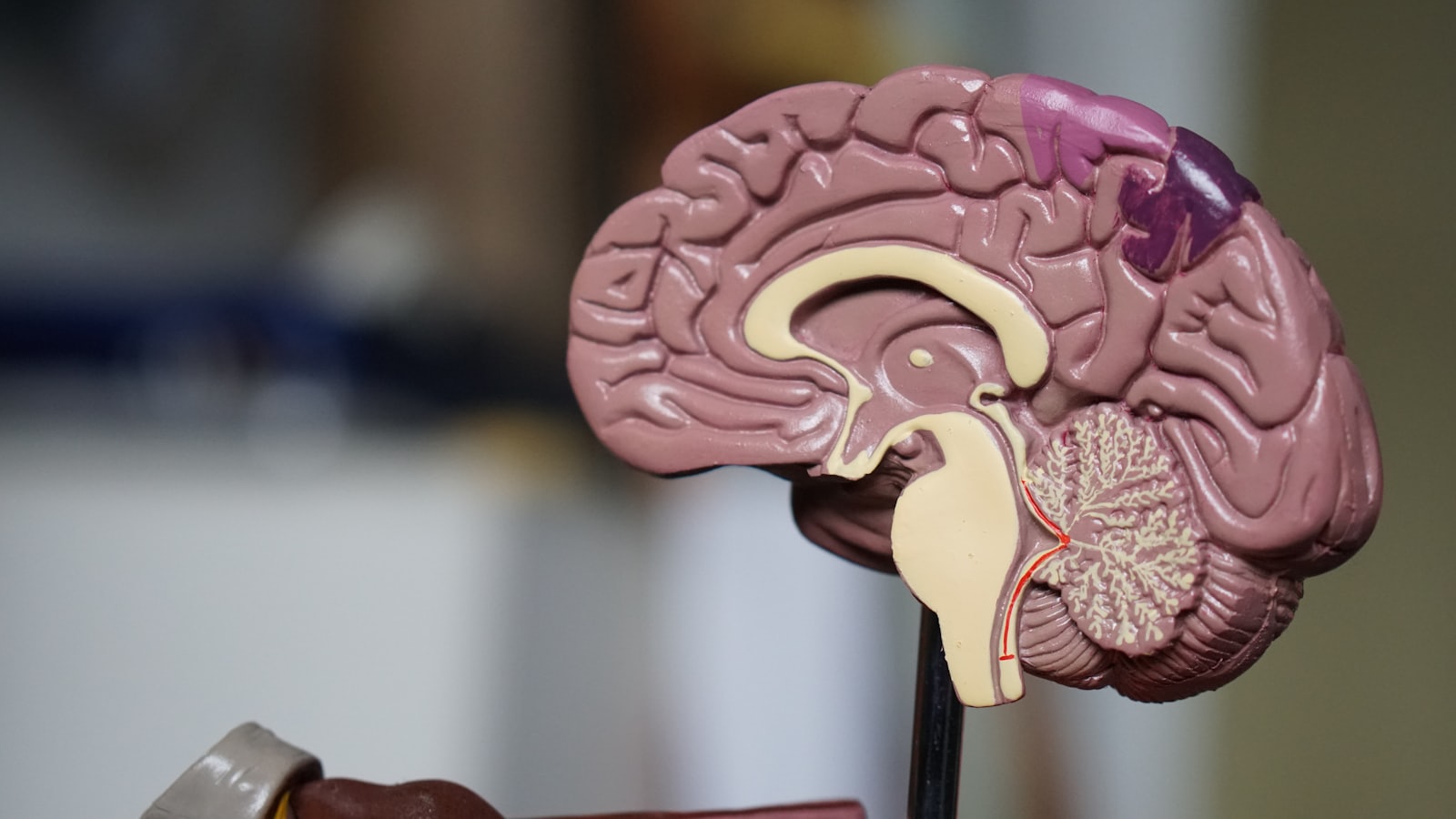
An ICU transfusion threshold is a decision aid for a defined clinical setting, not a universal haemoglobin number below which every patient receives blood. For EDAIC, connect three ideas: oxygen-carrying capacity, the patient's ability to deliver oxygen, and the evidence for the particular population in the question.
The phrase restrictive strategy describes an approach studied against a more liberal comparator. It does not mean withholding transfusion regardless of symptoms, bleeding or the clinical trajectory.
What the guideline threshold actually applies to
The 2023 AABB international guideline recommends a restrictive strategy for most haemodynamically stable hospitalised adults, considering transfusion below 7 g/dL. It also discusses different thresholds for certain surgical and cardiovascular populations and emphasises clinical context. The population and qualifying words belong in your notes alongside the number. AABB guideline
A useful way to revise any threshold is to write four lines: who was studied, what comparison was made, which outcome mattered, and what situations are outside that recommendation. This avoids importing a stable-patient threshold into an actively changing scenario without noticing the change.
Try 10 EDAIC questions free
Create a free account and answer EDAIC-style Part 1 MTF questions — each one graded per statement, with a full explanation.
Why saturation cannot replace haemoglobin
Oxygen saturation describes the proportion of haemoglobin binding sites carrying oxygen. Haemoglobin concentration describes how much haemoglobin is available in a given volume of blood. These quantities answer different questions.
For a deliberately simplified teaching comparison, hold saturation and cardiac output constant and ignore dissolved oxygen. The haemoglobin-bound component of oxygen content is then proportional to haemoglobin concentration. Reducing haemoglobin from 12 to 8 g/dL gives:
8 ÷ 12 = 0.67, or about two-thirds of the original haemoglobin-bound oxygen content.
This arithmetic illustrates why a normal SpO₂ does not establish normal oxygen content. It does not calculate a transfusion requirement: real decisions also involve circulation, oxygen demand, bleeding, adaptation and the risks of treatment. Work through the fuller relationship in our oxygen-content and delivery examples.
Two patients, the same number
Consider two invented exam stems, both reporting haemoglobin of 8 g/dL. One describes a stable patient with no ongoing bleeding or evidence of ischaemia. The other describes evolving chest pain and evidence suggesting acute myocardial ischaemia.
The number is identical; the evidence context is not. The CHEST critical-care guideline, published online in 2024 generally supports restrictive transfusion but distinguishes acute coronary syndrome from several other ICU settings. It also distinguishes an isolated troponin elevation from other evidence of cardiac ischaemia. Those are different scenarios, so the adjective “cardiac” alone is not enough to select an approach. CHEST guideline
In a viva, start by explaining why you cannot make the two cases equivalent. Then identify the information needed to classify the clinical setting accurately. You do not need to invent a treatment order to demonstrate the reasoning.
Answer an EDAIC-style question
This is one exam-format Part 1 multiple-true-false question from our bank. Mark each statement true or false, then see the worked answer.
Regarding the pathophysiology of oxygen delivery and consumption in circulatory shock:
Mark each statement true or false:
In healthy adults at rest, systemic oxygen delivery is approximately 1000 mL/min while oxygen consumption is about 250 mL/min, creating a physiological oxygen reserve.
When systemic oxygen delivery decreases, oxygen consumption immediately falls in direct proportion, indicating supply dependency at all levels of DO₂.
Cardiac output is determined by the product of heart rate and stroke volume, with stroke volume being influenced by preload, afterload, and myocardial contractility.
The unifying feature of all forms of shock, regardless of aetiology, is acute circulatory failure associated with inadequate cellular oxygen utilisation.
In septic shock, early goal-directed therapy targeting supranormal oxygen delivery values has been shown to consistently reduce mortality across all patient populations.
Read myocardial-infarction evidence carefully
The MINT trial compared restrictive and liberal strategies in patients with myocardial infarction and anaemia. Its primary 30-day outcome did not show a statistically significant benefit from the liberal strategy, but the confidence interval did not exclude clinically relevant harm from the restrictive strategy. “Not significant” is not the same as “proved equivalent.” MINT trial
That makes a valuable EDAIC statistics exercise. Ask whether a study was designed to test superiority, equivalence or non-inferiority before compressing the result into a flashcard. A non-significant superiority comparison does not automatically answer an equivalence question.
The subsequent 2025 AABB guideline specifically for hospitalised patients with acute myocardial infarction suggests a liberal strategy when haemoglobin is below 10 g/dL. This is a conditional recommendation based on low-certainty evidence, with clinical context and patient preferences still essential. It is an AMI-specific recommendation, not a replacement threshold for every ICU patient. Keep it separate from the general stable-adult recommendation in your notes. AABB AMI guideline
A revision table worth keeping
| Information in the stem | Why it matters to your answer |
|---|---|
| Stable or unstable physiology | Defines whether a stable-population threshold is applicable |
| Ongoing or recent bleeding | Changes how a single concentration should be interpreted |
| Evidence of myocardial ischaemia | May place the patient in a distinct evidence group |
| Oxygenation and circulation | Connects haemoglobin to oxygen delivery rather than treating it alone |
| Direction and timing of change | Separates a stable finding from an evolving problem |
Use this table to organise an answer, not as an independent clinical checklist. The first task is to recognise the question being asked; the second is to state the limits of the available evidence.
EDAIC self-test
“SpO₂ of 99% excludes reduced arterial oxygen content.” False. Saturation cannot identify how much haemoglobin is present.
“A restrictive transfusion guideline applies identically to every ICU diagnosis.” False. Scope and exceptions are part of the recommendation.
“A non-significant difference proves two strategies are equivalent.” False. Interpretation depends on the design, effect estimate and uncertainty.
“The threshold is the whole decision.” False. A threshold contributes to a decision within a defined clinical context.
For the viva, practise explaining the two hypothetical cases with the clinical-answer framework. Review P values and confidence intervals before summarising a trial. The EDAIC question bank can then help you test the physiological and evidence distinctions separately.
Sources and further reading
- AABB international red blood cell transfusion guidelines (2023)
- CHEST red blood cell transfusion guideline (online 2024; journal issue 2025)
- Carson et al. MINT trial of transfusion strategies in myocardial infarction (2023)
- AABB international guideline on red cell transfusion in acute myocardial infarction (2025)
Prepared with AI assistance. Sources checked on 6 November 2026. Original teaching examples are hypothetical. This article supports exam revision and does not replace patient-specific assessment, local protocols or specialist advice.
Start preparing for EDAIC Part I
Syllabus-mapped lessons, 30,000 MTF questions, spaced-repetition flashcards and an AI study plan — in one platform.
Start free